
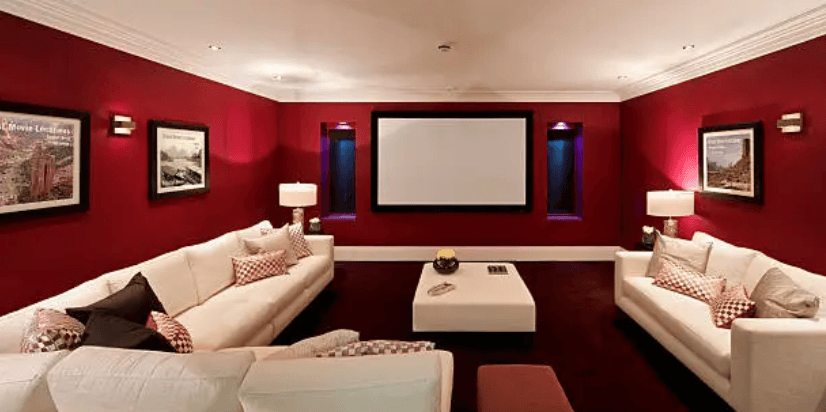
Basement Home Theater & Media Room Finishing in Manchester, NH
Manchester Elite Basements in Manchester, NH, with more than 20 years of experience, transforms your basement into a home theater or media room, adding significant value and functionality to your home. A well-finished basement tailored for entertainment can return 60-70% of the project cost at resale while providing a customized space for movies, gaming, or relaxation. Our approach focuses entirely on basements, addressing unique challenges such as moisture control, insulation, and code compliance to ensure a durable and comfortable environment.
"We combine design-driven planning with expert construction, starting with a free 3D layout that lets you visualize your future space. From dedicated project management to moisture-resistant materials, every detail is handled."
Planning & Designing Your Basement Home Theater
Assessing Basement Space and Layout
Before installing equipment or selecting furniture, measure your basement's dimensions carefully. Ideal viewing distance depends on your screen size — for example, a 100-inch screen pairs well with seating about 10-12 feet away. Ceiling height matters: at least 7 feet is preferred to avoid a cramped feeling. We evaluate walls, support beams, egress windows, and any low-clearance areas that could impact layout.
Optimizing Soundproofing and Acoustics
Soundproofing is a cornerstone of a basement theater design. We recommend a multi-layer approach: acoustic panels on strategic walls to reduce echo and sound leakage, soundproof drywall, and insulation rated for noise control. Thick carpet or sound-absorbing underlays prevent sound reflection. Sealing gaps around doors and windows enhances noise isolation. We also suggest blackout curtains to double as both light blockers and additional sound dampeners.
Lighting Strategies and Ambiance
Lighting is about creating the right atmosphere without glare or distraction. We use dimmable lighting and recessed lighting to maintain a low-profile, adjustable setup. Smart lighting systems let you control brightness and color temperature via phone or voice for convenience. Layered lighting combines wall sconces or LED strips with ceiling fixtures placed to avoid reflections on the screen.
Home Theater Equipment and Functional Spaces
Screen and Projector Selection
Choosing between a projector and a TV depends on space, lighting, and picture preferences. Projectors offer larger screen sizes — commonly 100 inches or more — which work well in naturally dark basements. TVs typically range from 55 to 85 inches and deliver sharper images with less setup. We help clients navigate this decision based on their specific basement dimensions and usage patterns.
Speaker Placement and Surround Sound
Speaker placement is critical for immersive audio. We recommend starting with a 7.1 surround sound setup: front left, center, and right speakers, two side and two rear surrounds, plus a subwoofer. In-wall and in-ceiling speakers save space and maintain aesthetics. Dolby Atmos adds ceiling speakers to create vertical sound movement.
Additional Entertainment Zones
To maximize your basement's value and functionality, we can include zones beyond the main theater — a bar area or snack station, game zones, or pool tables. Design transitions smoothly between zones without crowding, using soundproof dividers or rugs to reduce noise bleed between spaces.