
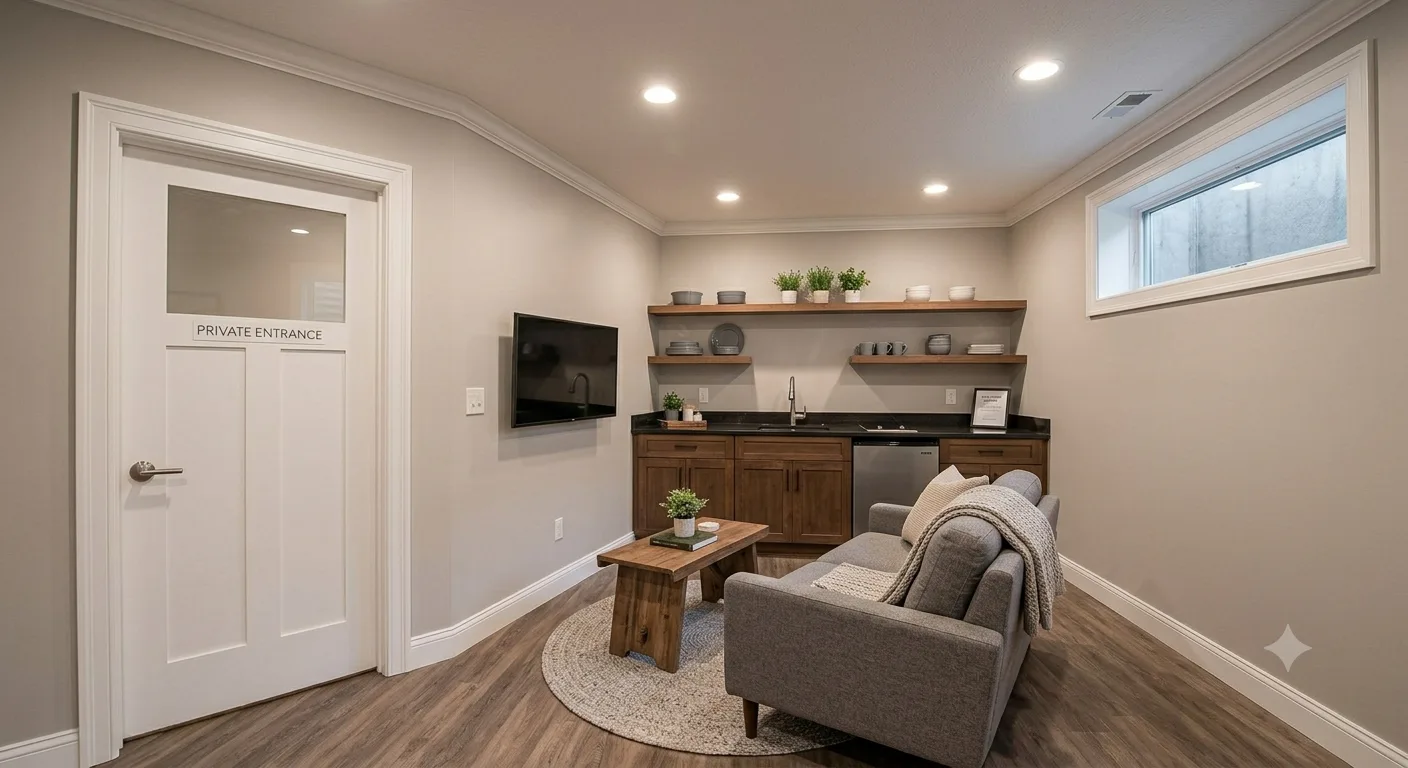
What Is an ADU?
An accessory dwelling unit (ADU) is a self-contained living space within or attached to an existing single-family home. A basement ADU includes its own entrance, kitchen, bathroom, and sleeping area. It's a separate apartment that happens to be below your main living space.
Basements are ideal for ADU conversions because the shell already exists. You're not building a new structure or pouring a new foundation. You're converting existing square footage into a legal, rentable unit. For Manchester homeowners, that means rental income of $1,000-$1,800/month, housing for a family member, or added resale value.
NH ADU Rules (SB 249 and Manchester Zoning)
New Hampshire Senate Bill 249, passed in 2017 and updated since, requires every municipality in the state to allow accessory dwelling units in any residential zone. Manchester complies with this requirement. The key rules:
- One unit on the property must be owner-occupied
- The ADU must have its own kitchen facilities, bathroom, and sleeping area
- A separate entrance is required (can be interior or exterior)
- Egress windows are mandatory for every sleeping room
- Smoke and carbon monoxide detection in every room
- The ADU must comply with all applicable building codes (2021 IRC/IBC)
- Zoning review and building permit required before construction
Manchester does not cap ADU size at a fixed percentage of the primary dwelling. The practical limit is your basement's square footage and ceiling height (minimum 7 feet finished). Most Manchester basements fall in the 600-1,000 sqft range, which is enough for a comfortable one-bedroom apartment.
What Our ADU Builds Include
Egress Windows
Every sleeping room needs a code-compliant egress window: 5.7 sqft net clear opening, 24 inches minimum height, 20 inches minimum width, 44 inches maximum sill height. We cut the foundation, install the window and well, and waterproof the opening.
Kitchen Rough-In
Water supply, drain lines, electrical circuits for a range and refrigerator, and ventilation for cooking. We rough in everything needed for a functional kitchen, whether you're installing a full range or a compact kitchenette.
Separate Entrance
An exterior door with a proper landing and stairs (or walkout access if your grade allows it). We build the entrance to code with adequate headroom, lighting, and weather protection.
Soundproofing
Resilient channel on the ceiling joists, dense-pack insulation between floors, and acoustic caulk at penetrations. This isn't optional for a livable apartment. The tenant upstairs and the tenant downstairs both need to be able to live normally.
Bathroom
Below-grade plumbing with ejector pump if needed, moisture-resistant materials, and code-compliant ventilation. See our bathroom remodeling page for details on below-grade bath construction.
HVAC
Independent temperature control via ductless mini-split ($3,000-$6,000 installed) or extended ductwork from the main system. Mini-splits are the preferred option for ADUs because they give the tenant independent control.
Electrical Subpanel
A dedicated subpanel for the ADU allows separate metering if desired and ensures the unit has adequate electrical capacity for kitchen appliances, HVAC, and general use.
Cost Range
A full basement ADU conversion in Manchester typically costs $65-$80 per square foot in 2026. For a 600-800 sqft basement, that works out to $40,000-$64,000. The final number depends on kitchen scope, number of egress windows, whether a separate entrance needs to be cut, and the condition of existing plumbing and electrical.
Permit fees for ADU conversions in Manchester run $200-$500 total (building, electrical, plumbing). We include permit management in every project.
For a full cost breakdown by project type, see our 2026 Cost Guide.
Permit Process
ADU conversions in Manchester require:
- Zoning review to confirm ADU eligibility
- Building permit application with floor plans and specifications
- Inspections: framing, rough electrical, rough plumbing, insulation, and final
- Certificate of occupancy before the unit can be rented
We handle every step. You don't file paperwork, schedule inspectors, or navigate zoning meetings. That's part of the service.
If you're considering a family living arrangement rather than a rental unit, our In-Law Suite page covers that option in detail.